
UGC Ads vs Brand Films: What Should a D2C Brand Make First?
UGC ads or a brand film? What each costs in India, when a D2C brand should make which first, and the order that stops you paying twice.
In this post
- What’s the difference between UGC ads and a brand film?
- How much do UGC ads and brand films cost in India?
- Why UGC usually comes first
- When a brand film should come first
- The expensive mistake: UGC without a story
- The order we’d follow with a real budget
- Which one do you need right now?
- The camera isn’t the decision
UGC ads or a brand film? For most D2C brands, the answer is UGC first. But only after you’ve written your brand story in one line, and only as a way to find out which part of that story sells. The brand film comes next, built on the angle your UGC has already proven.
Get the order wrong and you pay twice. Make the film first and you often shoot an idea nobody has tested. Make UGC with no story behind it and you end up with twenty creators selling twenty different brands.
Here’s how to decide, what each one costs in India, and the order we’d follow with a real budget.
What’s the difference between UGC ads and a brand film?
UGC ads are short, phone-shot videos made by creators or customers, talking about your product the way a friend would. A brand film is a professionally shot, scripted film that shows what your brand stands for.
They do different jobs, so comparing them on “which performs better” misses the point.
| UGC ads | Brand film | |
|---|---|---|
| Main job | Test angles, drive clicks and sales | Build memory and trust in the brand |
| Looks like | A real person on their phone | A crafted, cinematic film |
| Typical cost (India) | ₹1,000 to ₹45,000+ per video | ₹3 lakh to ₹20 lakh for a digital-first film |
| How many you need | Many, refreshed often | One strong one, cut into many versions |
| Lifespan | Weeks | Years, if the idea is right |
| Best at | Finding out what customers respond to | Making sure they remember who you are |
| Weak at | Building one consistent brand | Fast testing and quick changes |
UGC tells you what works. A brand film makes what works stick.
How much do UGC ads and brand films cost in India?
UGC creators in India charge ₹1,000 to ₹45,000+ per video. Beginners sit at the bottom of that range, experienced and niche creators at the top (Collab, 2026 rate guide). Marketplaces sell ready-made UGC videos for ₹1,500 to ₹8,000 (Snapsby, 2026). Those prices are usually for organic use only. Running the video as a paid ad for 30 to 90 days typically adds 20% to 75% on top. If you want to run it from the creator’s own handle, Meta calls that a partnership ad, so agree on it before the shoot. And if the creator posts it on their own profile, India’s ad regulator requires a clear paid-partnership label (ASCI influencer guidelines).
A digital-first brand film in India usually costs ₹3 lakh to ₹20 lakh for production. We break that down tier by tier in our guide to how much a brand film costs in India.
So one brand film can cost the same as dozens of UGC videos. That’s why the order matters so much.
Why UGC usually comes first
UGC wins the first round for three reasons.
People trust people. In Nielsen’s 2021 Trust in Advertising study, 88% of people globally said they trust recommendations from people they know more than any other channel (Nielsen). A good UGC ad borrows some of that trust. It looks like a recommendation, not an ad.
Meta now runs on volume. Meta rebuilt its ad system, Andromeda, to handle a flood of ad variations. In one month alone, more than a million advertisers made over 15 million ads with its AI tools (Meta Engineering, 2024). The system is built to pick from many options. A single polished film gives it one option. Ten UGC videos give it ten.
UGC is cheap research. Each UGC ad is a small bet on one reason to buy. After two weeks of spend, the numbers tell you which reason your customers actually care about. That’s information no brainstorm can give you.
When a brand film should come first
UGC-first is the default, not a rule. In eight years of shooting for D2C brands, these are the situations where we’d make the film first.
- Your price is premium. If you cost two or three times the category average, a shaky phone video can make you look like everyone else. The film has to justify the price before UGC can sell it.
- Trust is the whole sale. Baby products, health, skincare with active ingredients, anything a customer puts on their child or their skin. People want to see who’s behind it before they believe a stranger on Instagram.
- You’re launching or rebranding. When nobody knows you yet, UGC has nothing to point back to. The film sets the look, the sound and the line that every later ad will repeat.
- You’re pitching someone who isn’t a customer. Retail buyers, marketplaces, investors and distributors judge you on how established you look. A brand film does that job in 60 seconds.
- Your ads already feel like five different brands. If your UGC works in patches but nobody remembers your name, the next thing to make is the film that ties it all together.
The expensive mistake: UGC without a story
Most D2C brands don’t have a UGC problem. They have a story problem that UGC makes louder.
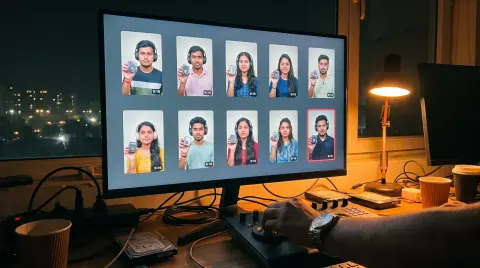
Hire 20 creators with no brief beyond “talk about the product” and you get 20 different pitches. One says it’s natural. One says it’s cheap. One says it’s luxurious. Each ad might even work on its own. But nobody builds one memory of your brand, so every ad has to start from zero.
The fix is one story that every creator tells in their own way. If you don’t have that line yet, start with our guide to brand storytelling for D2C brands.
The order we’d follow with a real budget
Here’s the sequence we’d use for a D2C brand spending on Meta ads.
- Write the story in one line. What does your customer feel, get or become because you exist? Test it with the rule we use on everything: feel it, or use it.
- Make 5 to 10 UGC ads, each a different doorway into that one story. Same story, different angles: the problem, the result, the objection, the ritual, the comparison.
- Run them for two weeks and read three numbers. Hook rate (did people stop?), hold rate (did they keep watching?) and cost per purchase (did they buy?). The angle that wins on all three is your story’s best doorway.
- Make the brand film on the winning angle. Now the film is built on a proven idea, made to be remembered.
- Cut the film into ads and brief the next UGC round from it. Cut it in every size your ads run in (Meta’s aspect ratio guide). The film gives your creators the look, the line and the sound. Your UGC starts to feel like one brand.
Here’s a made-up example to show the maths. Say you have ₹6 lakh for creative this quarter. In month one, you put ₹1 lakh into 10 UGC ads with paid usage. In month two, you put ₹5 lakh into a digital-first film built on the winning angle. Your numbers will differ, but the order holds.
Which one do you need right now?
Ask yourself these four questions.
- Do you know which reason to buy works best? No: start with UGC.
- Is your price or category trust-heavy? Yes: make the film first, or at least in the same quarter.
- Do people remember your name after seeing your ads? No: you need the film, and a story behind it.
- Are you running fewer than five ad variations? Yes: you need more UGC, whatever else you do.
The camera isn’t the decision
UGC versus brand film sounds like a question about cameras and budgets. It’s really a question about order. Test the story cheaply, then make it unforgettable.
Not sure which one your brand needs? Send us your brand name. We’ll make you a free 60-second teardown video that shows what your ads are saying, and what they should be.
Keep reading
Quick answers
What is a UGC ad?
A UGC ad is a short video made by a creator or customer, usually shot on a phone, talking about a product in their own words. Brands run it as a paid ad because it feels like a recommendation, not an advert.
Are UGC ads better than brand films?
Neither is better on its own. UGC is better for testing angles and getting clicks quickly. A brand film is better for building memory and trust. Most D2C brands need UGC first, then a film built on the angle that wins.
How much does a UGC video cost in India?
Usually ₹1,000 to ₹45,000+ per video depending on the creator’s experience. Using it as a paid ad for 30 to 90 days typically adds 20% to 75%.
How many UGC ads should a D2C brand test?
Start with 5 to 10, each a different angle on the same story, and give them about two weeks of spend before judging.
When should a D2C brand make a brand film first?
When your price is premium, your category runs on trust (baby, health, skincare), you’re launching or rebranding, you’re pitching retail or investors, or your ads don’t add up to one brand.